5 Common Changes Women Notice as Collagen Naturally Declines
Most people don’t think about collagen until something changes.


Affiliate Disclosure:
This post contains affiliate links. If you purchase through our links, we may earn a commission at no additional cost to you.
We only recommend products we genuinely believe in.
A little more stiffness getting out of bed. Hair that used to be thick, now looking noticeably thinner. Skin that somehow feels different — less firm, less resilient than it used to be.
These changes feel gradual, almost invisible — until one day they’re not.
Here’s what many women don’t realize: research suggests collagen production gradually declines beginning in early adulthood, with some estimates averaging around 1% per year. By the time you’re in your 30s and 40s, those cumulative changes can become noticeable. Your body is producing less of the protein that helps keep skin firm, cushions your joints, and supports your hair and nails.
The good news? Recognizing these changes early gives you more opportunities to support healthy aging through nutrition and lifestyle.
Here are five common changes that may be associated with age-related collagen decline — and what may actually help.
Collagen is the most abundant protein in the human body. It forms the structural foundation of your skin, bones, cartilage, tendons, hair, and nails — essentially the connective tissue that holds everything together.
Think of it like the scaffolding inside your body. When collagen levels are healthy, everything feels supported and resilient. When collagen declines, that scaffolding weakens — and you may start to feel and see the difference.
Certain lifestyle factors like sun exposure, smoking, high sugar intake, and chronic stress may accelerate collagen decline further.

This is usually the first change women notice.
Collagen contributes to skin’s elasticity and plumpness. As collagen levels decline with age, skin may gradually lose some of that resilience — which can result in fine lines, changes around the jawline and cheeks, and a shift in overall skin texture.
You might notice it most around the eyes, mouth, and neck — areas where skin is thinner and age-related changes tend to appear sooner.
What this may look like:
Skin changes may reflect one aspect of the natural changes occurring in connective tissues during aging — and are among the most studied areas of collagen research.

Collagen is a primary component of cartilage — the cushioning tissue that protects your joints. As collagen production declines with age, cartilage may become less resilient over time, which may be one of many factors contributing to age-related joint changes.
Many women in their late 30s and 40s notice more morning stiffness, discomfort during exercise, or joints that feel less fluid than before.
What this may look like:
Joint changes with age are influenced by many factors — including activity level, body weight, and overall nutrition. Collagen decline may be one contributing element worth considering as part of a broader approach.
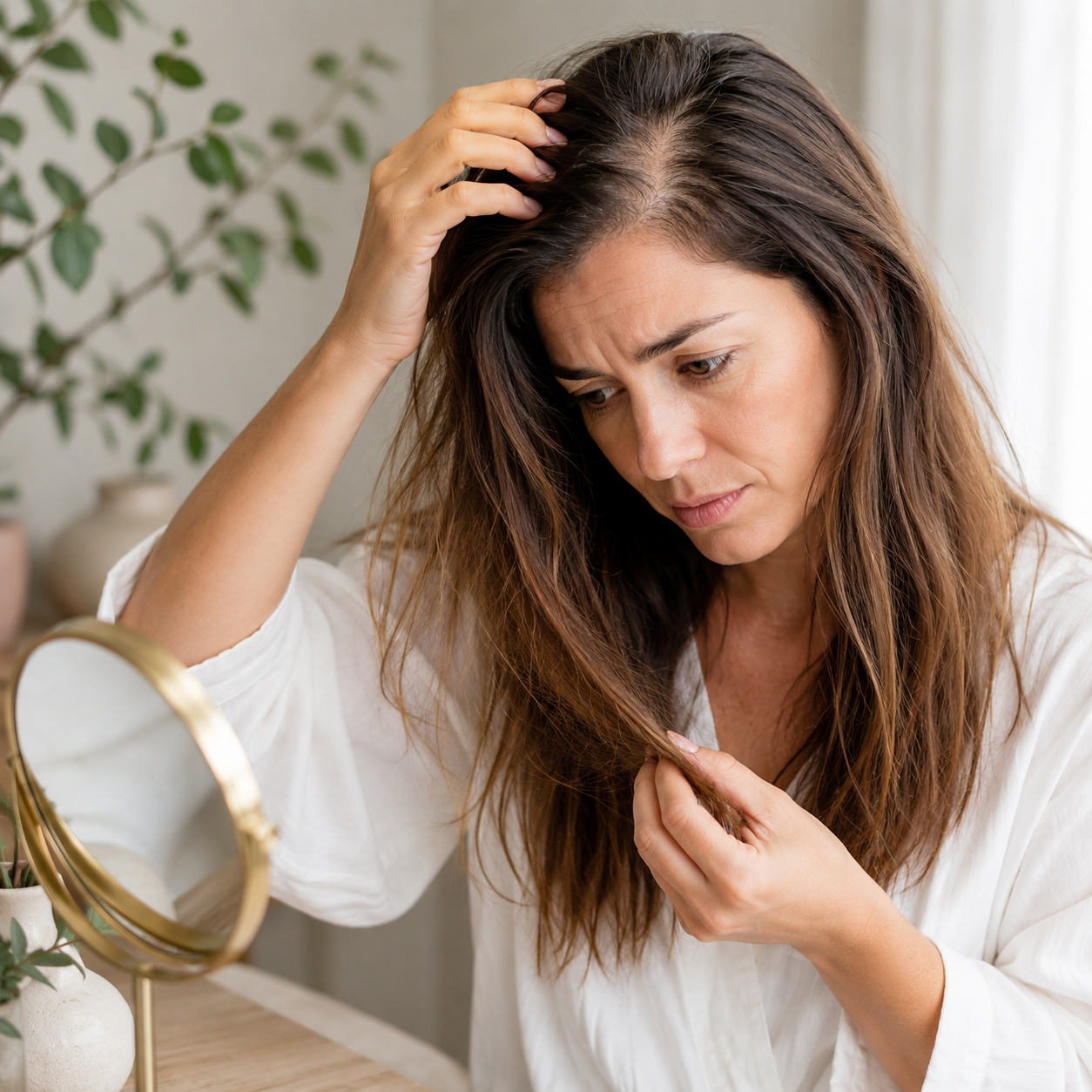
Hair thinning is one of the more emotionally difficult changes for many women — and its relationship to collagen is an area of ongoing research interest.
Collagen provides amino acids — particularly proline — that are used in the production of keratin, the primary structural protein in hair. Because of this, some researchers have explored whether collagen supplementation may support the healthy hair follicle environment. Hair thinning, however, has many possible causes including hormones, nutrition, genetics, medications, and the natural aging process.
For a deeper look at this topic, read our post: Reasons Your Hair Stopped Growing

Nails are made largely of keratin — and like hair, their production involves amino acids that collagen provides. Brittle nails may occur alongside age-related changes in collagen, although many other factors can contribute — including frequent water exposure, nutritional factors, and overall protein intake.
Some research suggests collagen supplementation may support nail strength in certain individuals, though results vary.

Since collagen is an important structural protein involved in connective tissues, age-related declines may contribute to changes in recovery over time — although recovery is influenced by many factors including sleep, nutrition, training load, and overall health.
Some women notice that muscle soreness lingers longer after exercise, or that overall recovery from physical activity feels different than it did in their 20s or early 30s.
What this may look like:
Recognizing these changes is the first step. The second is understanding what may actually help.
Certain foods support collagen synthesis naturally. Vitamin C is essential for collagen production — citrus fruits, bell peppers, and strawberries are excellent sources. Bone broth contains collagen precursors and amino acids. Eggs, chicken, and fish provide proline and glycine — the amino acids your body uses to build collagen.
Reducing sugar intake matters too. Excess sugar triggers a process called glycation that may damage existing collagen fibers over time.
Sun protection is one of the most practical ways to help preserve existing collagen — UV exposure is a well-documented contributor to collagen breakdown in skin. Adequate sleep supports overnight tissue repair. And managing chronic stress matters — elevated cortisol may negatively affect collagen synthesis.
This is where supplementation becomes relevant. Hydrolyzed collagen peptides — collagen that has been broken down into smaller chains for easier absorption — have been studied for their potential to support skin elasticity, joint comfort, and hair health when taken consistently over time.
Not all collagen supplements are equal. Single-source collagen powders address a limited range of collagen types. Formulas that include multiple collagen types are intended to support different tissues — skin, joints, hair, and nails — through a single daily supplement.
A hydrolyzed collagen powder containing 5 collagen types, formulated for women looking to support healthy skin, joints, hair, and nails. Also contains ingredients that have been studied for their roles in collagen synthesis and tissue support, including Biotin, Hyaluronic Acid, Vitamin C, and MSM. Flavorless, easy to dissolve, and backed by a 90-day satisfaction guarantee.
Read our full Advanced Collagen Plus review
A chocolate mushroom collagen drink formulated for women looking for collagen along with functional mushroom ingredients traditionally used to support cognitive wellness and everyday energy. Contains grass-fed collagen, Lion’s Mane, Chaga, Cordyceps, and MCT oil. Backed by a 365-day satisfaction guarantee.
Read our full CollaGenius review
Considering a supplement? It is worth reading the safety side first: Collagen Side Effects: What to Know Before You Start
This is the most common question — and the honest answer is: it varies, and it takes consistent time.
Some clinical studies have reported improvements in measures such as skin hydration and elasticity after approximately 8 to 12 weeks of consistent collagen supplementation, although results vary by individual. Skin-related changes tend to appear earlier in studies than joint or hair-related changes.
Consistency matters more than dosage. Taking collagen daily for several months will generally yield more meaningful outcomes than taking it sporadically. Pairing supplementation with adequate Vitamin C intake, sun protection, and quality sleep may also support better outcomes based on available research.
Research suggests collagen production begins declining in early adulthood, with some estimates averaging around 1% per year. The cumulative effect often becomes noticeable in your 30s and 40s, when changes in skin firmness, joint comfort, hair density, and nail strength tend to appear.
The five changes women most often notice are skin losing firmness or elasticity, joint stiffness or reduced flexibility, hair that feels thinner or grows more slowly, nails that break or peel easily, and recovery from exercise taking longer than it used to.
Hydrolyzed collagen peptides have been studied for their potential to support skin elasticity, joint comfort, and hair health when taken consistently over time. Results vary between individuals, and collagen is one factor among many — nutrition, sleep, sun exposure, and genetics all contribute.
Vitamin C is essential for collagen synthesis — citrus fruits, bell peppers, and strawberries are strong sources. Bone broth provides collagen precursors, while eggs, chicken, and fish supply proline and glycine, the amino acids your body uses to build collagen.
Sun exposure is a well-documented contributor to collagen breakdown in skin. Smoking, high sugar intake, and chronic stress may also accelerate decline — excess sugar triggers glycation, a process that may damage existing collagen fibers over time.
No. Hair thinning has many possible causes including hormones, nutrition, genetics, medications, and natural aging. Collagen provides amino acids used in keratin production, so it may be one contributing factor, but persistent or sudden hair loss is worth discussing with a healthcare provider.
Collagen decline is a natural part of aging — but these are changes commonly associated with aging that may prompt you to evaluate your nutrition and lifestyle habits, rather than simply accepting them as inevitable.
The five changes covered here — skin losing firmness, joint stiffness, hair thinning, brittle nails, and slower recovery — each have multiple potential contributing factors. Collagen decline may be one of them. Paying attention to these changes and addressing nutrition, lifestyle, and supplementation gives you more opportunities to support healthy aging in your 30s, 40s, and beyond.
For a complete morning wellness routine that complements collagen support, read: 7 Morning Wellness Habits That Can Change Your Day
This content is for informational and educational purposes only.
It is not intended as medical advice and should not replace consultation with a qualified healthcare provider.
These statements have not been evaluated by the Food and Drug Administration.
These products are not intended to diagnose, treat, cure, or prevent any disease.
Individual results will vary.